The effects of aging on body systems are easiest to understand from one idea: at rest, an older body usually keeps its variables in range, but its reserve, the extra capacity it can call on under stress, shrinks. This page explains aging from the inside out: the damage that builds up in cells, why telomeres shorten and cells enter senescence, and then how each system you have studied in this course changes with age, how those changes add up, and what slows them.
Lifespan, healthspan and reserve
Mrs. Castillo is 82. At her yearly checkup her heart rate, blood pressure, blood sodium, glucose and oxygen saturation are all normal. Two months later she catches influenza, and within two days she is confused, dehydrated and short of breath, and her blood sodium has climbed. A 30-year-old with the same infection spent three days in bed and recovered.
Nothing was wrong with Mrs. Castillo's homeostasis at rest. What had changed was how far each system could stretch. Physiologists call this loss of reserve, or homeostenosis (stenosis = narrowing): the range over which the body can hold a variable steady narrows with age. You met one example with cardiac reserve, the gap between resting and highest cardiac output, which falls as maximum heart rate drops by roughly 0.7 to 1 beat per minute each year. Almost every organ follows the same pattern (Figure 1).
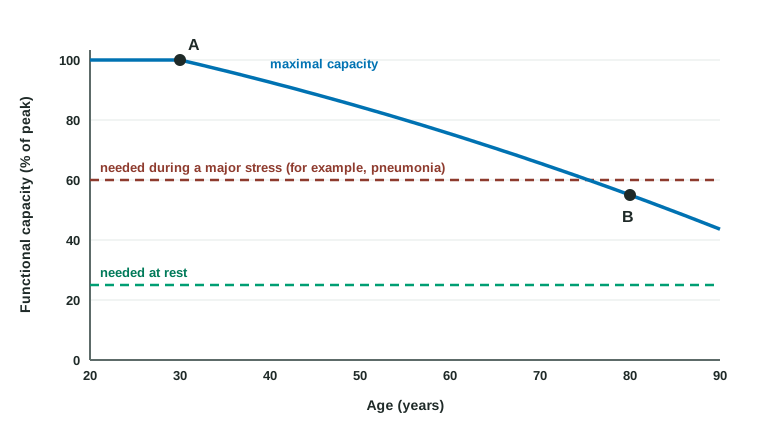
Two more terms help. Lifespan is how long a person lives; the longest verified human life was 122 years. Healthspan is how long a person lives in good health. Much of what research on aging aims at is healthspan: keeping reserve up, not only adding years.
Keep one distinction in mind throughout. Many conditions become common with age, such as dementia, atherosclerosis, osteoarthritis, anemia and incontinence, but they are diseases, not normal aging. Normal aging lowers reserve; a disease is a separate process that needs its own explanation and often its own treatment.
Aging at the cellular level
No single cause explains aging. The best-supported view is that many kinds of damage build up in cells faster than they can be repaired, and that cells' own protective responses to that damage add harms of their own. Aging at the cellular level comes down to a handful of processes, which interact.
Damage that builds up
- DNA damage and mutations. Every day each cell's DNA is damaged thousands of times, by copying errors, by reactive oxygen species leaking from mitochondria, and by ultraviolet light and chemicals. Repair enzymes fix almost all of it, but not quite all, so mutations slowly accumulate in body cells over a lifetime. That is one reason cancer becomes more common with age.
- Damaged proteins. Proteins get oxidized, misfolded and cross-linked. Glucose sticks slowly to long-lived proteins such as collagen and the lens proteins of the eye without any enzyme, and forms cross-links that stiffen them. The systems that refold, break down and recycle proteins, including lysosomes, also work less well with age, so damaged proteins linger.
- Mitochondria. Mitochondria in older cells make ATP less efficiently and leak more reactive oxygen species, which damage nearby molecules.
Telomeres
Each chromosome ends in a telomere (telo- = end, -mere = part): thousands of repeats of a short DNA sequence (TTAGGG in humans), bound by proteins that cap the end. The cap stops the cell from mistaking the chromosome's end for a broken piece of DNA.
Telomeres shorten because of how DNA is copied. You saw in DNA replication that DNA polymerase adds nucleotides to one end of a strand only, and it cannot start a strand from nothing: each new piece begins on a short starter, a primer, that is later removed. On one of the two new strands, the gap left by the last primer at the very tip of the chromosome has nothing beyond it for the polymerase to build from, so a little of the end is never copied. This is called the end-replication problem. Every time a cell divides, its telomeres lose about 50 to 100 base pairs. Human telomeres are about 10,000 base pairs long at birth, so the loss is harmless for many divisions.
Some cells replace what they lose with telomerase, an enzyme that carries its own short RNA template and adds new repeats to the chromosome ends. Germ cells use it, stem cells use a little, and most cancer cells switch it back on, which is one reason they can divide without limit. Most body cells make almost none.
In 1961 Leonard Hayflick showed that normal human cells grown in a dish divide only about 40 to 60 times and then stop. This Hayflick limit is set largely by telomeres: when a telomere becomes too short, its cap fails, and the cell reads the bare end as damaged DNA.
Senescence
A cell that detects damaged DNA, from a failed telomere or from other damage it cannot fix, activates the checkpoint proteins you met in cell-cycle control, including p53. The cell then does one of two things. It dies by apoptosis, or it enters senescence (senex = old man): it stops dividing permanently but stays alive and active (Figure 2).
Senescence is a double-edged response. Its benefit is that a cell with damaged DNA can no longer divide into a tumor. Its cost is that senescent cells are not idle. They release a steady mix of inflammatory cytokines and protein-digesting enzymes that damage the tissue around them and can push neighboring cells into senescence too. Senescent cells accumulate in skin, blood vessels, joints, fat and other tissues with age. In mice, drugs or genetic tricks that remove senescent cells delay many age-related problems and lengthen life; trials of such drugs in people are at an early stage.
Stem cells and inflammation
Two more changes follow. Stem cells, the reserve that replaces lost cells, dwindle and divide less well, so tissues repair more slowly: fewer satellite cells in muscle, slower renewal of the skin and gut lining, a bone marrow that responds more slowly to blood loss. And the body settles into a chronic, low-grade inflammation, fed by senescent cells, by an aging immune system and by damaged molecules. This "inflammaging" is linked to atherosclerosis, loss of muscle, insulin resistance and frailty.
How each system changes with age
The same cell-level processes play out differently in each organ. What follows is how each system changes with age in a healthy person, in the order the course taught the systems. Rates vary widely; many changes are faster with inactivity, smoking and disease, and slower with exercise.
Skin
The epidermis thins and renews itself more slowly, and the dermis loses fibroblasts, collagen and elastic fibers, while the collagen that remains becomes cross-linked. Skin wrinkles and sags, tears and bruises more easily, and heals more slowly. Fewer melanocytes means paler skin and, as the pigment stem cells in hair follicles run out, gray hair. Fewer sweat glands and less sweat make heat harder to shed; less subcutaneous fat makes cold harder to resist; fewer epidermal dendritic cells weaken the skin's immune defense. The skin also makes much less vitamin D from sunlight. Most of the visible aging of the face and hands is photoaging from years of ultraviolet light, which is why skin that has been covered all its life looks much younger.
Bone and joints
Bone mass peaks around age 30. After that, osteoclasts resorb slightly more than osteoblasts rebuild in each remodeling cycle, and bone mass falls by about 0.5 to 1% a year. In women the loss speeds up for several years after menopause, because estrogen normally restrains osteoclasts. Less calcium absorbed from the gut and less activity add to the loss. Spongy bone, with its large surface, is lost first, so the vertebrae and the ends of long bones weaken most. When the loss becomes osteoporosis, vertebrae can collapse under ordinary loads, causing loss of height and a hunched upper back (kyphosis), and a fall can break a hip or wrist.
In the joints, articular cartilage loses water and becomes less resilient, intervertebral discs lose water and flatten, and ligaments stiffen, so range of motion shrinks. Osteoarthritis, a disease of the whole joint rather than simple wear, becomes very common.
Muscle
Sarcopenia, the loss of muscle mass and strength with age, begins in middle age and speeds up after about 60. Strength falls faster than mass. Part of the reason is neural: motor neurons die, and the muscle fibers they leave behind are either lost or taken over by neighboring motor units, which become fewer and larger, so fine control and quick force suffer. Fast glycolytic fibers shrink the most, which costs power more than endurance. Fewer satellite cells slow repair, and older muscle responds less to protein and to growth signals. Resistance training reverses much of this at any age: in one well-known study, people in their nineties more than doubled their leg strength in eight weeks.
Nervous system and senses
The brain begins to shrink slowly in midlife, and faster after about 60. Most of the loss comes from smaller neurons, fewer dendrites and synapses, and loss of myelinated white matter; neuron numbers in most of the cortex are largely kept. Processing speed and working memory decline, while vocabulary and knowledge hold steady or keep growing. Sleep becomes lighter, with less slow-wave (N3) sleep and more waking at night, and its timing shifts earlier. Reflexes and reaction time slow, and balance worsens as vision, joint position sense and the vestibular system all decline. Dementia is not part of normal aging: it is disease, although its risk rises steeply with age.
In the eye, the lens keeps stiffening, so near focus fails from the mid-40s (presbyopia), and its proteins clump into cataracts; a smaller pupil and a yellowing lens let less light reach the retina. In the ear, hair cells are lost from the base of the cochlea first, so high-pitched sounds go first. Smell declines markedly after about 70, and taste less so.
The autonomic nervous system changes too. Stiffer arteries stretch less, so baroreceptors signal changes in pressure more weakly, and the baroreceptor reflex responds more slowly: standing up quickly can cause orthostatic hypotension and falls.
Endocrine and reproductive systems
- Menopause, at about 51, ends ovarian estrogen and progesterone production, as you saw in the female hormone cycle; bone loss, hot flashes and a rise in LDL follow.
- Testosterone falls slowly in men, by about 1% a year from middle age, with wide differences between men. Sperm production continues, but new mutations in sperm rise with the father's age. The prostate often enlarges, and the enlarged gland can squeeze the urethra.
- Growth hormone, IGF-1 and DHEA fall steadily. Replacing growth hormone in healthy older adults does not restore youth and causes side effects.
- Insulin sensitivity falls, mainly because there is less muscle and more visceral fat, so type 2 diabetes becomes more common.
- Renin and aldosterone fall, so older kidneys conserve sodium less well and excrete potassium less well.
- Cortisol and thyroid hormones stay close to normal in healthy aging.
Blood, heart and vessels
Red bone marrow is gradually replaced by yellow marrow, and the marrow responds more slowly to bleeding or infection, but resting blood counts stay normal. Anemia is common in older adults but is never "just age"; it has a cause to find. Clotting factors such as fibrinogen rise, which, together with less activity, raises the risk of clots.
Large arteries stiffen as elastic fibers fragment and are replaced by collagen, which becomes cross-linked and calcified. A stiff aorta cannot stretch to absorb each stroke volume, so systolic pressure rises, diastolic pressure stays level or falls, and pulse pressure widens: the isolated systolic hypertension common in older adults. The left ventricle, pumping against that higher afterload, thickens and stiffens. It fills more slowly early in diastole and relies more on atrial contraction. The higher filling pressure stretches the atria, and with age-related scarring this makes atrial fibrillation common in older adults; losing the atrial contraction then cuts filling sharply. The SA node loses pacemaker cells, the heart responds less to sympathetic stimulation, and maximum heart rate falls, so cardiac reserve and the highest oxygen uptake decline by about 10% per decade in inactive people. Resting cardiac output in a healthy older person changes little. Atherosclerosis becomes very common, but it is a disease, driven by blood pressure, LDL, smoking and diabetes, not an inevitable result of age.
Immune system
The thymus begins to shrink after puberty and is mostly fat by old age, so few new naive T cells are made. The T cell population becomes dominated by memory cells from past infections, and the range of antigens it can recognize narrows. B cell responses weaken too. The results: more infections such as pneumonia and urinary tract infections, reactivation of dormant viruses such as the chickenpox virus as shingles, weaker responses to vaccines (which is why high-dose or boosted influenza vaccines are given after 65), more autoantibodies, and the low-grade inflammation described above. Fever is often blunted, so an older person with pneumonia may have no fever and may show confusion instead.
Respiratory system
The costal cartilages calcify and the chest wall stiffens, while the lungs lose elastic recoil, so the thorax becomes harder to expand and the lungs empty less completely. Small airways close earlier during expiration: residual volume rises, and vital capacity and FEV1 fall. The alveolar surface shrinks and ventilation and perfusion match less well, so arterial PO2 drifts slightly down. Weaker coughing and slower clearance by cilia, together with a less reliable swallow, make pneumonia more likely, and the breathing response to low oxygen and high CO2 is blunted.
Digestive system and metabolism
Swallowing slows, and more people lose teeth, mostly to gum disease. Some older adults develop a thinned stomach lining that makes less acid and less intrinsic factor, so vitamin B12 absorption falls. Constipation is common, mostly from inactivity, low fluid and fiber intake and medicines, and pouches in the colon wall (diverticula) become very common. The liver shrinks and receives less blood, so some drugs are cleared more slowly. Appetite and thirst both decline. Body fat, especially visceral fat, rises while muscle falls, and basal metabolic rate falls, mostly because muscle is lost; after about 60 the tissues' own rate of energy use also falls a little.
Urinary system and fluid balance
The kidneys lose nephrons, and GFR falls on average by about 1 mL/min a year after about 40, though some people show almost no decline. Plasma creatinine may stay normal because an older person makes less creatinine from less muscle, which is why eGFR, which corrects for age and sex, is used. Drugs cleared by the kidneys build up unless their doses are lowered. Older kidneys concentrate urine and conserve sodium less well, total body water is lower, and thirst is blunted, so dehydration and abnormal blood sodium develop quickly. The bladder holds less, contracts on its own more often and empties less completely, so older adults urinate more often, including at night. Incontinence becomes common, but it is not normal and often has a treatable cause.
How the changes add up
Because the systems depend on one another, small changes in several of them combine into large effects. Three common examples:
- Falls and fractures. Weaker muscles, slower reflexes, poorer balance and vision, and a sluggish baroreceptor reflex that lets blood pressure drop on standing all make a fall more likely. Osteoporosis makes the fall more likely to break a hip, and a hip fracture in an older adult carries a high risk of death within a year.
- Drug side effects. Less kidney function and liver blood flow clear drugs more slowly; less body water concentrates water-soluble drugs; more fat stores fat-soluble drugs longer; and many older adults take several drugs at once. That is why doctors "start low and go slow" with doses.
- Infections that look unusual. A weaker immune response, a blunted fever and less brain reserve mean an infection may show up first as confusion, a fall or loss of appetite, and blunted thirst lets dehydration follow.
What slows aging
Much of the decline once blamed on age comes from inactivity. Regular aerobic exercise raises the highest oxygen uptake at any age and keeps it well above that of inactive peers; resistance training builds muscle and bone and reduces falls; balance training reduces falls further. Not smoking, protecting the skin from the sun, controlling blood pressure, LDL and glucose, sleeping well, eating enough protein and staying socially and mentally active all extend healthspan. Eating fewer calories without malnutrition lengthens life in many animals; in people, trials so far show only changes in markers of aging, not proof of longer life.
Summary
With age, resting homeostasis is usually kept, but reserve shrinks, so stresses that a young body absorbs can overwhelm an old one. In cells, DNA damage, damaged proteins and failing mitochondria build up. Telomeres shorten with each division, because DNA polymerase cannot copy the chromosome's very end, until a failed cap is read as damage; checkpoints such as p53 then trigger apoptosis or senescence, a permanent stop that protects against cancer but releases inflammatory signals. Stem cells dwindle and low-grade inflammation rises. In the systems: skin thins and heals slowly; bone is lost, fastest after menopause; muscle and strength fall; the brain processes more slowly and the senses dull; hormones such as estrogen, testosterone and growth hormone fall; arteries stiffen, raising systolic pressure, and cardiac reserve falls; the thymus shrinks and vaccines work less well; lungs lose recoil; the kidneys lose nephrons and GFR falls. Many common conditions, such as dementia, anemia and incontinence, are diseases, not normal aging, and exercise slows much of the decline.