Most of the world's electricity still comes from burning fossil fuels. This page follows the energy through a power plant, shows how to calculate its efficiency, and weighs the costs of getting the fuels out of the ground.
Fuel to outlet
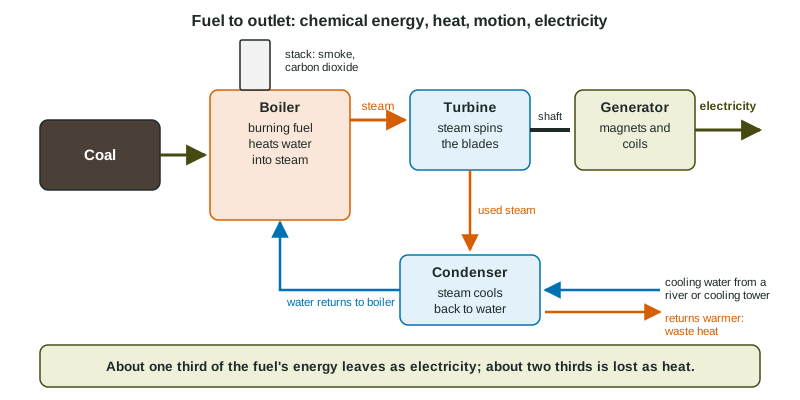
- Boiler. Coal, oil or natural gas burns. Its chemical energy heats water in pipes into high-pressure steam.
- Turbine. The steam pushes on curved blades and spins them, the way wind spins a pinwheel.
- Generator. The turbine's shaft spins magnets past coils of wire, which makes an electric current.
- Condenser. Cooling water from a river, lake or cooling tower takes heat from the used steam. The steam condenses back into water and returns to the boiler.
- Power lines carry the electricity to homes and businesses.
Many other kinds of plants, including those that burn wood, use the same steam, turbine and generator; only the heat source differs.
Efficiency: why two thirds is lost
Efficiency is useful energy out divided by energy in, times 100. Every step loses some energy as heat (the second law of thermodynamics), and the biggest loss is turning heat into motion: to keep the steam cycle going, the condenser must dump a lot of heat into cooling water. That is why a typical coal plant turns only about a third of its fuel's energy into electricity.
Losses build on each other, so the overall efficiency is the product of the step efficiencies, written as decimals.
Overall efficiency. Boiler 88%, turbine and steam cycle 37%, generator 98%, power lines 94%.
Setup:
Answer: about , close to the average U.S. coal plant (EIA). Averaging the four numbers (79%) is a classic mistake.
Input needed. How much chemical energy must be burned to deliver 500 MWh to homes?
Output = input × efficiency, so input = output ÷ efficiency.
Setup:
Answer: about of coal energy.
Getting fossil fuels out of the ground
Coal is dug from surface mines, which strip off the soil and rock above the seam, or from underground mines. Surface mining destroys habitat over large areas, and water draining through mine waste can become acidic and carry metals.
Oil and natural gas are pumped from wells. Hydraulic fracturing, or fracking, drills down and then sideways into shale, and pumps in water, sand and chemicals under high pressure. The rock cracks, the sand holds the cracks open, and trapped gas or oil flows to the well. Fracking greatly increased natural gas supplies, but it can contaminate groundwater through faulty wells or spills, release volatile chemicals and methane into the air, use millions of gallons of water per well, and the wastewater pumped back underground has triggered small earthquakes.
Tar sands must be mined or melted out with steam, which uses large amounts of energy and water and leaves ponds of polluted waste.
Weighing fossil fuels
| Advantages | Disadvantages |
|---|---|
| high energy per kilogram; easy to store and transport | release carbon dioxide, which drives climate change |
| can run day and night, whatever the weather | release other air pollutants when burned |
| existing plants, pipelines and engines already use them | mining and drilling damage land and water; spills |
| relatively cheap in many places | fixed supply that will run down |
Warm water released by a power plant harms rivers through heat, not chemicals: the cooling water never touches the fuel. Say "warmer water holds less dissolved oxygen."