Chemical messengers and receptors
1Why this matters
Priya, 16, uses a reliever inhaler when her airways tighten and she starts to wheeze. It works within minutes. During a bad month she used it many times a day, and each puff seemed to help less. Her doctor added a steroid tablet, which took several hours to make a difference. Two drugs, two speeds, and a response that faded with overuse: all three come down to the proteins these messengers bind.
2What this builds on
3Quick check before you start
1. Which kind of molecule crosses the phospholipid bilayer most easily?
- A small hydrophobic (lipid-soluble) molecule
- A charged ion
- A large hydrophilic protein
Show the answer
The core of the bilayer is made of hydrophobic fatty acid tails. Small hydrophobic molecules dissolve through it; ions and large hydrophilic molecules cannot.
- Correct: A small hydrophobic (lipid-soluble) molecule:
- A charged ion:
- A large hydrophilic protein:
2. What is a transcription factor?
- A protein that binds DNA and switches genes on or off
- An enzyme that copies DNA before division
- A ribosome that reads messenger RNA
Show the answer
Transcription factors bind DNA near genes and increase or decrease their transcription, which changes which proteins the cell makes.
- Correct: A protein that binds DNA and switches genes on or off:
- An enzyme that copies DNA before division:
- A ribosome that reads messenger RNA:
3. How does a cell release molecules stored in vesicles?
- Endocytosis
- Exocytosis
- Osmosis
Show the answer
In exocytosis, a vesicle fuses with the plasma membrane and empties its contents outside the cell.
- Endocytosis:
- Correct: Exocytosis:
- Osmosis:
4Anatomy
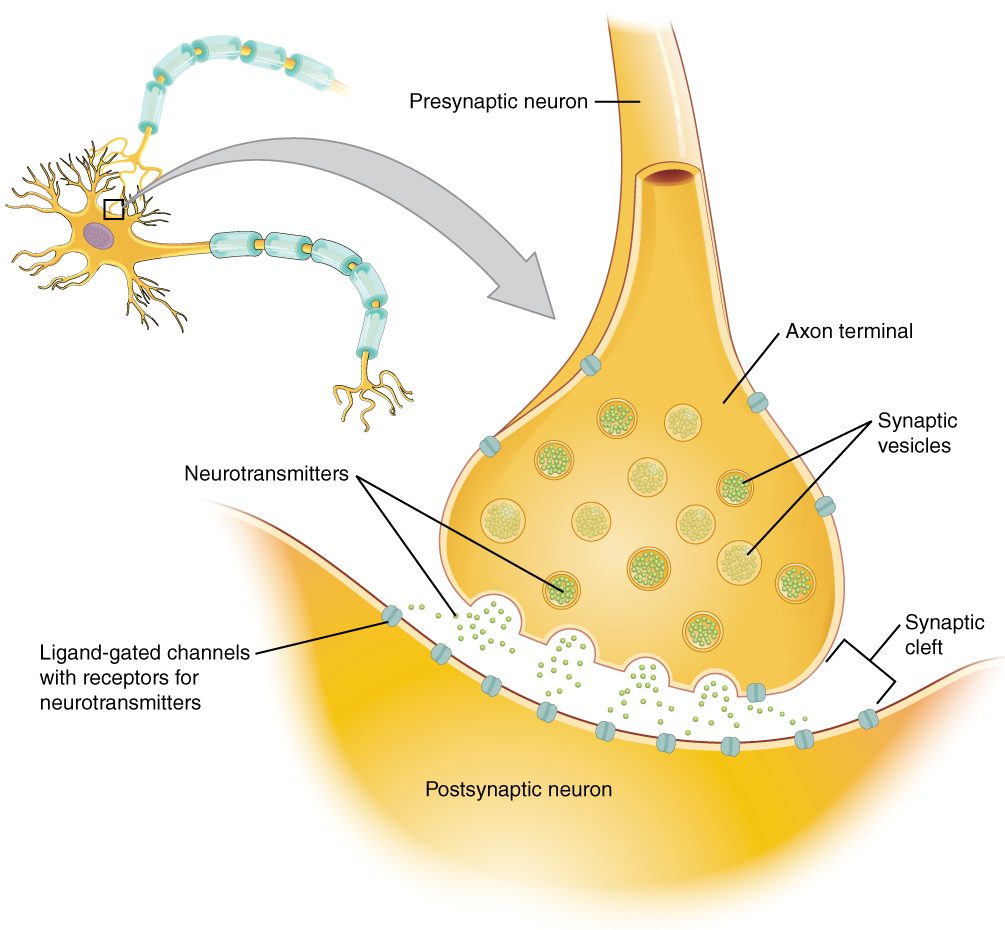
With labels hidden, select a box to reveal its label.
5How it works, step by step
- A water-soluble messenger (the first messenger) binds its receptor protein on the target cell's membrane.The receptor protein changes shape and switches on a G protein on the inner face of the membrane.
- The active G protein switches on a membrane enzyme.The enzyme converts many ATP molecules into cAMP, the second messenger.
- cAMP switches on enzymes that phosphorylate other proteins.Many target proteins change shape and activity: the signal is amplified at every step.
- The changed proteins alter what the cell is doing.The cell responds, for example an airway smooth muscle cell relaxes; when the first messenger leaves and cAMP is broken down, the response ends.
6Core concepts
7A common mistake
The wrong idea: A hormone affects every cell it reaches, because blood carries it everywhere.
What actually happens: Blood carries a hormone to nearly every cell, but only target cells respond: cells with receptor proteins that fit it. A cell without those receptor proteins ignores the hormone, however much is present. And the response depends on the receptor protein, not the messenger: the same messenger can make one cell contract and another relax.
8Check yourself
Anything you miss goes into your review queue.
1. A hormone in the blood reaches cells in the liver, skin and fat tissue equally. Only the liver cells respond. What best explains this?
- The hormone is broken down before reaching the skin and fat tissue
- Liver cells have more ATP than skin and fat cells
- Only the liver cells carry receptor proteins that bind this hormone
- The hormone enters every cell equally but produces an effect only in the liver
Show the answer
Only target cells respond to a messenger, and a target cell is one with receptor proteins that fit it. The skin and fat cells meet the hormone but have no receptor proteins for it.
- The hormone is broken down before reaching the skin and fat tissue: The question says the hormone reaches all three tissues equally. Reaching a cell is not enough; the cell must have a matching receptor protein.
- Liver cells have more ATP than skin and fat cells: Energy supply does not decide which cells respond. Receptor proteins do.
- Correct: Only the liver cells carry receptor proteins that bind this hormone: Correct. Matching receptor proteins make the liver cells target cells.
- The hormone enters every cell equally but produces an effect only in the liver: Whether a messenger enters a cell depends on its solubility, not the tissue. The response still requires a matching receptor protein.
2. An activated white blood cell releases an interleukin. The interleukin binds receptor proteins on that same white blood cell and drives it to divide. What kind of signaling is this?
- Paracrine
- Autocrine
- Endocrine (hormonal)
- Synaptic
Show the answer
Autocrine signaling (auto- = self) is a messenger binding receptor proteins on the same cell that released it.
- Paracrine: Paracrine signaling acts on neighboring cells. Here the releasing cell is also the target.
- Correct: Autocrine: Correct. The cell signals itself.
- Endocrine (hormonal): The interleukin never travels in the blood to a distant target.
- Synaptic: No neuron or synapse is involved.
3. A newly discovered messenger is a small, hydrophobic molecule made from cholesterol. Where are its receptor proteins most likely to be?
- Inside the target cell, in the cytosol or nucleus
- In the plasma membrane, facing out
- In the blood plasma
- On the outer surface of the nuclear envelope, facing the cytosol
Show the answer
A small hydrophobic molecule dissolves through the phospholipid bilayer, so it can reach receptor proteins inside the cell. Steroids made from cholesterol bind intracellular receptors.
- Correct: Inside the target cell, in the cytosol or nucleus: Correct. Lipid-soluble messengers cross the membrane and bind intracellular receptors.
- In the plasma membrane, facing out: Membrane receptor proteins serve water-soluble messengers that cannot cross the bilayer.
- In the blood plasma: Proteins in the plasma carry lipid-soluble messengers, but they are transport proteins, not the receptor proteins that start the response.
- On the outer surface of the nuclear envelope, facing the cytosol: Intracellular receptors sit in the cytosol or inside the nucleus, not on the outer surface of the nuclear envelope.
4. Put the steps of a G-protein-coupled receptor pathway in order.
- The first messenger binds a receptor protein in the membrane
- The receptor protein switches on a G protein
- The G protein switches on a membrane enzyme
- The enzyme converts ATP into cAMP
- cAMP switches on enzymes that phosphorylate target proteins
- The phosphorylated proteins change the cell's activity
Show the answer
The signal passes from the first messenger outside, through the receptor protein and G protein in the membrane, to the enzyme making cAMP (the second messenger) inside, and then to phosphorylated proteins that carry out the response.
- Correct order: 1. The first messenger binds a receptor protein in the membrane 2. The receptor protein switches on a G protein 3. The G protein switches on a membrane enzyme 4. The enzyme converts ATP into cAMP 5. cAMP switches on enzymes that phosphorylate target proteins 6. The phosphorylated proteins change the cell's activity
5. Level 2. A drug blocks the enzyme that breaks down cAMP in heart muscle cells. A messenger that raises cAMP in these cells then binds its receptor protein as usual. Predict each variable compared with no drug.
| Variable | Change |
|---|---|
| Number of receptor proteins occupied by the messenger | — |
| cAMP concentration inside the cells | — |
| Phosphorylation of the target proteins | — |
| How long the response lasts after the messenger leaves | — |
Show the answer
Blocking cAMP breakdown leaves the first messenger's binding unchanged but raises cAMP, strengthening and prolonging everything downstream.
- Number of receptor proteins occupied by the messenger: no change. The drug acts inside the cell, after the receptor protein; it does not change how much messenger binds.
- cAMP concentration inside the cells: up. cAMP is still made at the usual rate but broken down more slowly, so it builds up.
- Phosphorylation of the target proteins: up. More cAMP switches on more of the enzymes that phosphorylate target proteins.
- How long the response lasts after the messenger leaves: up. Breaking down cAMP is what ends the response; slowing that step lets the response continue longer.
6. The nerve to a skeletal muscle is cut. Weeks later, the muscle fibers respond strongly to even tiny amounts of the nerve's neurotransmitter applied anywhere on their surface. What happened?
- The fibers up-regulated receptor proteins for that neurotransmitter
- The fibers down-regulated receptor proteins for that neurotransmitter
- The neurotransmitter became lipid-soluble
- The fibers became autocrine cells
Show the answer
When a messenger stays low for a long time, target cells add receptor proteins. Without the nerve's neurotransmitter, the fibers insert its receptor proteins across their whole surface and become far more sensitive.
- Correct: The fibers up-regulated receptor proteins for that neurotransmitter: Correct. Long-term absence of a messenger leads to up-regulation.
- The fibers down-regulated receptor proteins for that neurotransmitter: Down-regulation would reduce receptor proteins and weaken the response. The response became stronger.
- The neurotransmitter became lipid-soluble: Solubility is a property of the molecule and does not change. The change is in the target cells.
- The fibers became autocrine cells: Autocrine signaling means a cell responding to its own messenger. The fibers are responding to a neurotransmitter applied from outside.
7. You touch a hot pan and pull your hand away in a fraction of a second. Why is this response carried by the nervous system rather than by a hormone?
- Hormones cannot reach the arm
- Hormones only affect organs, not muscles
- Neurotransmitters travel through the blood to the arm muscles much faster than hormones do
- Nerve signals reach specific muscles in milliseconds; hormones take seconds or more
Show the answer
Nervous signaling sends action potentials along axons and releases neurotransmitter across synapses onto specific muscle fibers within milliseconds. A hormone must travel through the blood and reaches every target cell, so it is too slow and too widespread for a precise, split-second action.
- Hormones cannot reach the arm: Blood reaches the arm, so hormones can too. The problem is speed and precision.
- Hormones only affect organs, not muscles: Many hormones act on muscle. The issue is the time a hormone takes to arrive and act.
- Neurotransmitters travel through the blood to the arm muscles much faster than hormones do: Neurotransmitters are not carried in the blood to reach muscles; they cross the synaptic cleft at each synapse.
- Correct: Nerve signals reach specific muscles in milliseconds; hormones take seconds or more: Correct. Fast, precise responses are the strength of nervous signaling.
9Summary
A chemical messenger is a ligand: it binds a specific receptor protein, and only target cells carrying that receptor protein respond. Messengers are grouped by distance: autocrine (the same cell), paracrine (neighbors, such as nitric oxide, cytokines and eicosanoids), neurotransmitters (across a synapse) and hormones (through the blood). Water-soluble messengers bind receptor proteins in the membrane and often act through a G protein and a second messenger such as cAMP: fast, short-lived and amplified. Lipid-soluble messengers cross the membrane and bind intracellular receptors that change gene expression: slow and lasting. Cells up-regulate or down-regulate their receptor proteins. Nervous signaling is fast and precise; endocrine signaling is slower, widespread and longer-lasting.