You eat three or four times a day, but your brain needs glucose every minute. Your body bridges the gap by switching between two metabolic states. This page compares the absorptive vs postabsorptive state: what each organ does with fuel after a meal and between meals, which hormones flip the switch, and how the body shifts its fuels over days without food, from glycogen to glucose made from protein to ketone bodies, and finally to starvation.
Two states, one switch
Picture a day. You eat breakfast at 7, lunch at 12:30 and dinner at 7 in the evening. For about four hours after each meal, nutrients are pouring into your blood from your gut. The rest of the time, including the whole night, nothing is arriving, and your body runs on what it stored.
- The absorptive state (also called the fed state) is the period, about four hours after a meal, when nutrients are being absorbed from the gut. The body burns some of the incoming fuel and stores the rest.
- The postabsorptive state (also called the fasting state) is the period when the gut is no longer delivering nutrients: late morning, late afternoon and overnight. The body draws on its stores and keeps blood glucose up.
On a three-meal day you spend roughly half your time in each. The switch between them is set mainly by the balance of two hormones from the pancreatic islets: insulin, high after a meal, and glucagon, high between meals.
The absorptive state
Follow a meal of pasta with meat sauce and cheese as it is absorbed (Figure 1).
- Nutrients arrive. Glucose and amino acids are absorbed into the villus capillaries and travel through the hepatic portal vein, so the liver sees them first. Fat is packed into chylomicrons, which enter the lymph and reach the blood without passing through the liver.
- Insulin rises, glucagon falls. Rising glucose and amino acids, and gut hormones released as food arrives, make beta cells release insulin. Insulin, the rising glucose itself, and less glucagon set the direction for every organ below.
- Liver. Liver cells take up glucose and store it as glycogen. Glycogenolysis stops, and the liver stops releasing glucose into the blood. Gluconeogenesis slows, and the glucose it still makes goes into glycogen instead. Once glycogen stores are full, extra glucose is turned into fatty acids by lipogenesis and sent out as triglycerides in VLDL. Amino acids are used to build plasma proteins; extra ones are broken down and their nitrogen made into urea.
- Skeletal muscle. Insulin moves GLUT4 carriers into the membrane, and glucose floods in. Muscle burns glucose and stores the rest as glycogen. It takes up amino acids and builds protein.
- Adipose tissue. Insulin switches on lipoprotein lipase in adipose capillaries, so fatty acids from chylomicrons and VLDL enter fat cells and are stored as triglyceride. Fat cells also take up glucose and use it for the glycerol backbone. Lipolysis is switched off.
- Brain. The brain burns glucose, as it always does. Its uptake does not depend on insulin.
The theme is uptake and storage. Glucose is the main fuel of most tissues, and fat breakdown and ketogenesis are switched off.
The postabsorptive state
By late morning, breakfast has been absorbed. Blood glucose drifts back toward its fasting level of about 70 to 99 mg/dL, and your brain is still taking about 5 grams an hour. Now the flows reverse (Figure 2).
- Insulin falls, glucagon rises. Falling glucose lowers insulin release and raises glucagon release.
- Liver: glucose out. Glucagon switches on glycogenolysis, and the liver's glucose-6-phosphatase releases free glucose into the blood. Glucagon also switches on gluconeogenesis, using lactate, glycerol and amino acids. After an overnight fast, the two supply roughly equal shares of the glucose leaving the liver.
- Adipose tissue: fat out. With insulin low, lipolysis speeds up. Fatty acids travel to muscle, heart, kidney and liver; glycerol goes to the liver for gluconeogenesis.
- Muscle: switches fuel. With insulin low, muscle takes up little glucose and burns mostly fatty acids. It keeps its glycogen for its own use and releases lactate and some amino acids, mainly alanine, which the liver makes into glucose.
- Brain and red blood cells: still glucose. They keep using glucose, which is now reserved mostly for them.
This switch of most tissues from glucose to fatty acids is called glucose sparing. It is what lets a limited supply of glucose, from about 100 g of liver glycogen and from gluconeogenesis, keep the brain supplied between meals.
| Absorptive state (fed) | Postabsorptive state (fasting) | |
|---|---|---|
| When | About 4 hours after a meal | Between meals and overnight |
| Source of blood glucose | The gut | The liver: glycogenolysis, then gluconeogenesis |
| Insulin and glucagon | Insulin high, glucagon low | Insulin low, glucagon high |
| Liver | Takes up glucose; glycogenesis; lipogenesis; exports VLDL | Releases glucose; glycogenolysis; gluconeogenesis; ketogenesis in a long fast |
| Skeletal muscle | Takes up glucose (GLUT4); builds glycogen and protein | Burns fatty acids; keeps its glycogen; releases lactate and alanine |
| Adipose tissue | Stores triglyceride (lipoprotein lipase on, lipolysis off) | Lipolysis: releases fatty acids and glycerol |
| Main fuel of most tissues | Glucose | Fatty acids (glucose sparing) |
| Brain | Glucose | Glucose; ketone bodies as well after a few days |
| Overall direction | Anabolic: building and storing | Catabolic: breaking down and releasing |
The hormones that set fuel use
Insulin is the only hormone that lowers blood glucose and drives storage. Several hormones oppose it. Together they are the hormones that set fuel use.
- Anabolic hormones (ana- = up, bol- = throw) promote building and storage. Insulin is the main one. Growth hormone, through IGF-1, and testosterone promote protein building.
- Catabolic hormones (cata- = down) promote the breakdown of stores and release fuel into the blood: glucagon, epinephrine and cortisol. Because they raise blood glucose against insulin, they are also called counterregulatory hormones.
| Hormone | Main trigger | Effect on blood glucose | Effect on fat stores | Effect on protein | Time to act |
|---|---|---|---|---|---|
| Insulin | Rising glucose and amino acids after a meal | Lowers | Stores; blocks lipolysis | Builds | Minutes |
| Glucagon | Falling glucose; amino acids | Raises (liver glycogenolysis and gluconeogenesis) | Little direct effect in humans | Speeds amino acid use in the liver | Minutes |
| Epinephrine | Exercise, stress, low glucose | Raises (liver and muscle glycogenolysis) | Strong lipolysis | Little effect | Seconds to minutes |
| Cortisol | Stress, long fasts, early morning | Raises (gluconeogenesis; less uptake by muscle and fat) | Lipolysis (and fat gain in some areas with long exposure) | Breaks down muscle protein | Hours |
| Growth hormone | Sleep, fasting, exercise | Raises (less uptake, more release) | Lipolysis | Builds (through IGF-1) | Hours |
Growth hormone fits both groups. It is anabolic for protein and growth but catabolic for fat, and it opposes insulin's effect on glucose. During a fast, growth hormone release rises. Its fat-releasing effect helps shift fuel use to fat while its protein-building effect limits muscle loss.
The same hormones explain untreated type 1 diabetes. With no insulin, the body behaves as if it were fasting, even while blood glucose is very high: the liver keeps releasing glucose, muscle and fat stop taking it up, lipolysis runs unchecked, and the liver makes ketone bodies. The signal of plenty is missing, so the body acts as if it were starving in the middle of plenty.
Beyond overnight: a longer fast
A hiker lost for two weeks with water but no food shows how the body keeps adjusting (Figure 3).
- The first day: glycogen runs out. Liver glycogen is mostly used up within about 24 hours. From then on, all new glucose must come from gluconeogenesis.
- Days 1 to 3: protein pays for glucose. The brain still needs about 120 g of glucose a day. Glycerol and lactate cannot supply that much, so the liver makes most of it from amino acids. Cortisol helps drive the breakdown of muscle protein, about 75 g a day.
- From day 2 or 3: ketone bodies rise. With insulin low and fatty acids flooding into the liver, ketogenesis speeds up. Blood ketone bodies climb over the first week to several mmol/L, while blood pH stays near normal, because a little insulin is still present and limits fat release.
- After several days: the brain switches. Once ketone bodies are high, the brain takes them up in proportion to their level. By a few weeks, ketone bodies supply about two thirds of its energy, and its glucose need falls to about 40 g a day.
- Protein is spared. With less glucose needed, less muscle protein is broken down: about 20 g a day by several weeks. The kidneys also make a larger share of the new glucose.
- Energy use falls. Levels of the active thyroid hormone and sympathetic activity fall, so the body spends less energy at rest, and stores last longer.
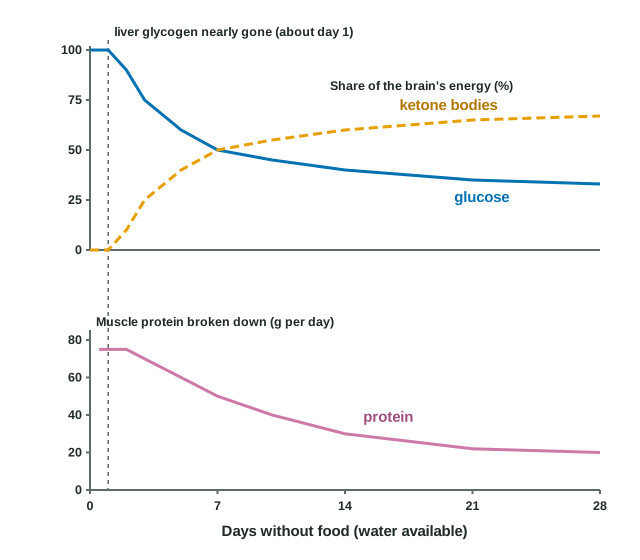
The ketone switch is the key adaptation. Without it, making 120 g of glucose a day from protein would use up vital muscle, including heart and breathing muscle, within a few weeks. With it, a person with normal fat stores can live on water alone for about two months.
Starvation
Starvation is severe, prolonged lack of food energy, in which the body must live on its own tissues. It follows the fasting sequence above, until the fat stores run low.
- While fat lasts, fat supplies most of the energy and protein loss stays low.
- When fat stores are nearly used up, the body has no alternative fuel. Protein breakdown rises sharply again.
- Muscle wastes, including the heart and the diaphragm. Plasma proteins fall. The immune system weakens.
- Death usually comes from heart failure, abnormal heart rhythms or infection, once roughly a third to a half of body protein has been lost.
How long a person survives depends mainly on how much fat they start with: a lean person runs out sooner. Children, with small stores and high needs for growth, are affected fastest.