Human activities change ecosystems in many ways: clearing land, introducing species, harvesting fish and trees, and releasing pollution. In Unit 8 the focus is on pollution: what happens to living things when chemicals, heat, sediment, oil or plastic get into the water and onto the land.
Tolerance and indicator species
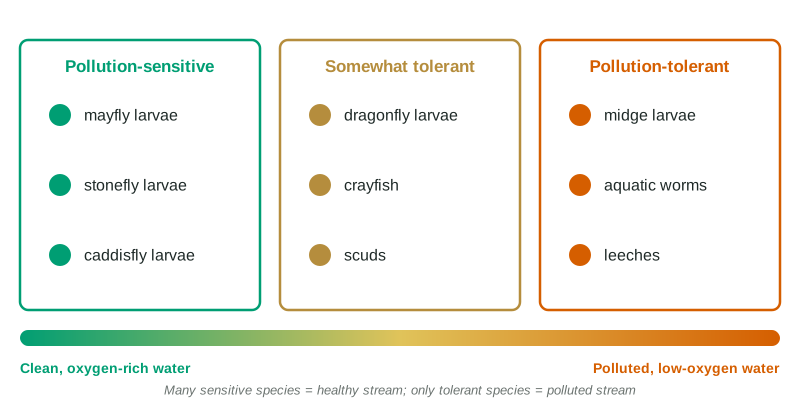
Every species has a range of tolerance for temperature, oxygen, pH and pollutants. When pollution pushes conditions outside that range, the species is stressed, then disappears. Because species differ, pollution does not just reduce life; it changes which species live there.
That makes some species useful as indicator species. Mayfly, stonefly and caddisfly larvae need cold, clean, oxygen-rich water, so finding many of them means a healthy stream. Midge larvae, aquatic worms and leeches tolerate low oxygen and pollution, so a stream full of them and empty of mayflies has a problem. Volunteers and agencies sample stream insects to monitor water quality.
Worked example: reading an indicator. A kick-net sample upstream of a pipe finds 48 mayfly and stonefly larvae; just below the pipe it finds 2. What is the percent change?
Setup: . Answer: . A fall that large in sensitive species points to pollution from the pipe.
Coral reefs
Reef-building corals live with algae inside their tissues that make food by photosynthesis. When water stays too warm for too long, the corals expel these algae. The coral tissue is clear, so the white skeleton shows: coral bleaching. A bleached coral is still alive but starving; if the heat lasts, it dies. Pollution and sediment add stress. Sediment from coastal building and farms clouds the water, blocking the light the algae need, and can smother the coral.
Oil spills
Oil from tankers, pipelines and drilling floats and spreads. It mats birds' feathers and mammals' fur so they lose waterproofing and insulation, and animals swallow it while cleaning themselves. Oil also smothers marshes and tidal zones. Cleanup uses floating booms to contain a slick, skimmers to remove it, and sometimes chemical dispersants, which break oil into droplets but add their own risks.
Ocean plastics
Plastic does not biodegrade quickly. Animals get tangled in nets, rings and bags, and sea turtles and seabirds eat plastic that looks like food. Sunlight and waves break plastic into ever smaller pieces; those under 5 mm are microplastics. Plankton and filter feeders eat them, so they enter food webs, along with the toxic chemicals plastics absorb. Reducing plastic at the source, catching litter before it reaches waterways, and better recycling are the main responses.
Reading pollution data on ecosystems
Exam data sets on this topic usually pair a cause with a response: a pipe and the insects below it, water temperature and coral cover, distance from a spill and bird deaths. Describe the trend with numbers from the table, then link it to the mechanism: sensitive species fall because the water moved outside their tolerance range; corals fall because heat made them expel their algae. Avoid saying the pollutant "affects" the species. Say which way it changed and why.