The best way to deal with waste is not to make it. The waste hierarchy ranks the options from best to worst, and most solutions in this topic fit somewhere on it.
The waste hierarchy
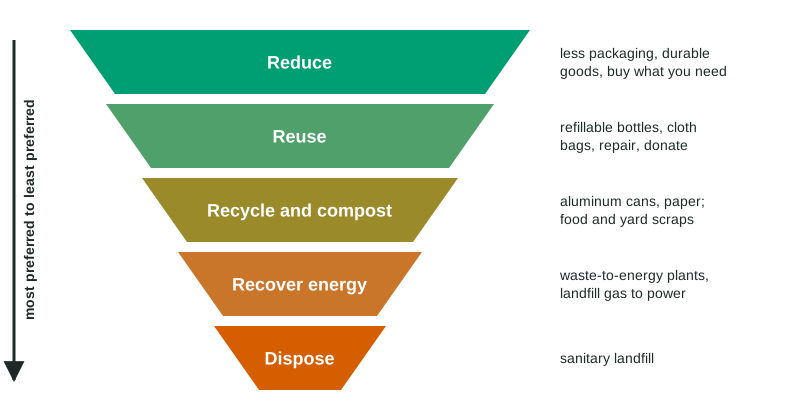
- Reduce (source reduction): use less material in the first place. Products with less packaging, durable goods, buying in bulk, digital documents.
- Reuse: use items again for the same or another purpose. Refillable bottles, cloth bags, repairing instead of replacing, donating.
- Recycle and compost: turn used materials into new products, and food and yard waste into compost.
- Recover energy: burn what is left in waste-to-energy plants or capture landfill gas.
- Dispose: bury what remains in a sanitary landfill.
Recycling: benefits and costs
Recycling saves raw materials, cuts mining and logging, and saves energy. Remelting aluminum cans takes about 5% of the energy needed to make new aluminum from ore. But recycling is not free. Trucks must collect the materials, facilities must sort and clean them, and there must be buyers for the result. Glass and many plastics are worth little, so some collected material ends up landfilled anyway. Contaminated recycling, such as greasy pizza boxes or the wrong plastics, makes the problem worse.
Worked example: energy saved. Assume recycling one aluminum can saves about 0.2 kWh compared with making it from ore. A school recycles 12,000 cans a year.
Setup: . Cans cancel. Answer: a year.
Composting
Food and yard waste are a large part of what goes to landfills. In a compost pile, microbes break them down with oxygen, making CO2, water, heat and humus-rich compost that improves soil. In a landfill, the same material breaks down without oxygen and makes methane. Composting keeps that material out of the landfill and returns its nutrients to the soil. Drawbacks: piles must be managed, and they can smell and attract animals if done poorly.
Recovering energy from waste
Landfills can capture landfill gas, mostly methane, with a network of wells and burn it to make electricity. This turns a strong heat-trapping gas into CO2, lowers explosion risk and produces energy. E-waste recycling recovers valuable metals and keeps toxic ones out of landfills.
Judging a waste policy
Text passages on this topic usually pit a city or company against a group that opposes a rule. To analyze one, find each side's claim, the evidence offered, and the assumption underneath. A bag fee may cut the number of bags handed out, but if people then buy plastic trash liners, part of the saving is lost. A pay-as-you-throw program may shift waste into recycling more than it reduces total waste. Good answers use the numbers given, say which way each change went, and explain why.
Policies that reduce waste
- Pay-as-you-throw: households pay by the bag or bin of trash, so recycling and composting become cheaper choices.
- Bottle and can deposits: a refundable fee that rewards returning containers.
- Bag fees or bans, and rules requiring makers to take back products such as electronics.