Everything you think, feel and do depends on messages carried by your nervous system. This topic gives you its map: which part decides, which part carries out voluntary movement, and which part runs your organs without asking you. The exam gives a situation and asks which division explains it, so the goal is to recognize each one in action.
The map
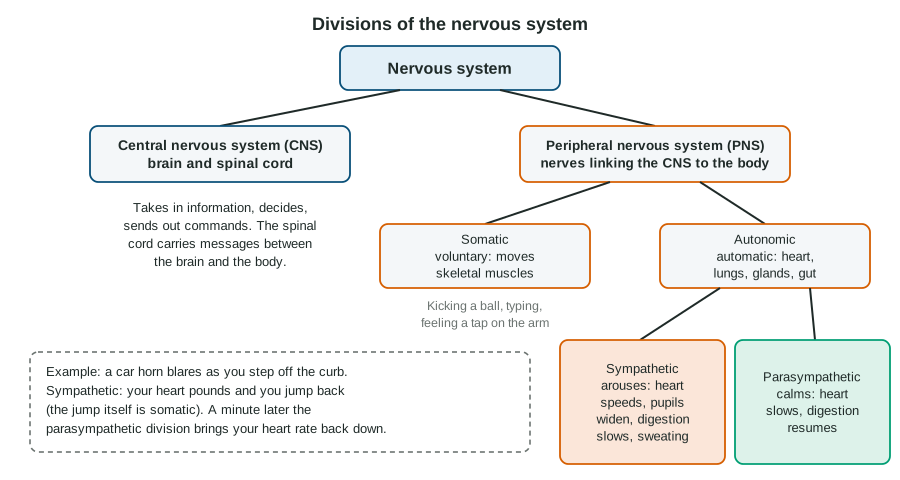
The nervous system is built from neurons, nerve cells that receive and send information (the next topic shows how they fire). It has two main parts.
The central nervous system (CNS) is the brain and the spinal cord. It takes in information, makes decisions and sends out commands. The spinal cord, inside the backbone, carries messages between the brain and the body. That is why a spinal cord injury in the middle of the back can take away feeling and movement in the legs but not the arms: the nerves for the arms join the cord above the injury.
The peripheral nervous system (PNS) is every nerve outside the brain and spinal cord. It carries information in from the senses and the body and carries commands out. It has two parts.
Somatic and autonomic
The somatic nervous system controls the skeletal muscles, the ones you move on purpose, and brings in sensations from the skin, muscles and joints. A goalkeeper's dive, typing a message and feeling a tap on your arm are all somatic.
The autonomic nervous system runs the body automatically: heart rate, breathing, digestion, sweating, the pupils of the eyes. "Autonomic" sounds like "automatic", which is a good memory hook. It has two divisions that work in balance.
Sympathetic and parasympathetic
| Sympathetic: arouses | Parasympathetic: calms | |
|---|---|---|
| When | threat, excitement, effort | rest, after the threat passes |
| Heart | beats faster | slows down |
| Breathing | faster | slower |
| Pupils | widen | narrow |
| Digestion | slows | resumes |
| Sweating | increases | back to normal as sympathetic activity fades |
Why would the body slow digestion in an emergency? Energy and blood flow are limited. In danger, the sympathetic nervous system sends them to the heart, lungs and muscles, the organs that let you act now; digesting lunch can wait. When the danger passes, the parasympathetic nervous system takes over to conserve energy: "rest and digest".
Worked example: naming every division in one scene.
"Walking home, Leo hears footsteps behind him. His heart pounds and his mouth goes dry. He turns around and sees his neighbor, waves, and keeps walking. A few minutes later his heart rate is back to normal."
Hearing the footsteps and deciding to turn: the central nervous system (his brain) interprets and decides.
Pounding heart, dry mouth: the sympathetic division of the autonomic nervous system.
Turning and waving: the somatic nervous system moves his skeletal muscles.
Heart rate back to normal: the parasympathetic division calms the body.
Most errors on these questions mix up the two autonomic divisions, or call a voluntary movement autonomic.
Breathing is unusual: it runs automatically, but you can also control it on purpose. Slow, deep breathing is associated with a shift toward parasympathetic, calming activity, which is one reason it is taught for managing nerves before a test or a speech.