Complex Numbers
The imaginary unit i has i² = −1 , so √(−b²) = bi .
Part 1 · Hook
Why this matters
Part 2 · Before you start
What this builds on
Part 3 · Prerequisite check
Quick check before you start
1. What is the discriminant of ?
Show the answer
.
- Correct: :
- :
- :
- :
2. Multiply out .
Show the answer
A difference of squares: the middle terms cancel.
- Correct: :
- :
- :
- :
Part 4 · See it
See it first
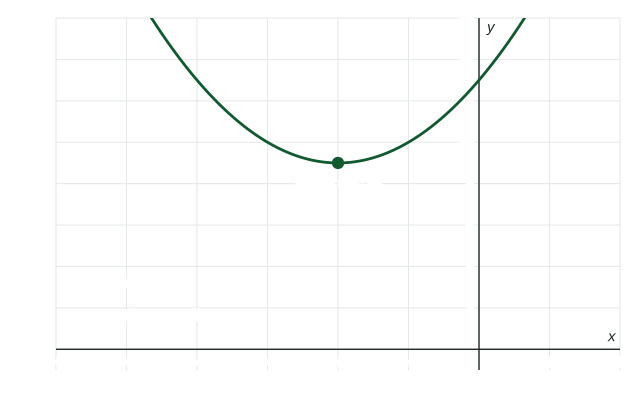
Part 5 · Step by step
How it works, step by step
- is defined by square roots of negatives exist:
- You add, subtract or multiply complex numberswork like binomials, then replace with
- The discriminant of a quadratic with real coefficients is negativeits two solutions are complex conjugates and
Part 6 · Key ideas
Key ideas
- The imaginary unit has . A complex number is with real (real part) and (imaginary part).
- The complex conjugate of is , and
, a real number. - Powers of repeat every four: .
Part 7 · Misconception
A common mistake
The wrong idea: .
What actually happens: , so . The sign flips whenever is replaced.
Part 8 · Check yourself
Check yourself
Exam-style questions. Anything you miss goes into your review queue.
1. Write in terms of .
Show the answer
, so . Check: .
- : , not . No real number squares to a negative.
- Correct: : Right: , and .
- : is also , but names the root .
- : Take the square root of as well: .
2. Multiply .
Show the answer
Distribute:
- Correct: : Right:
. - : , so the real part is .
- : This multiplies the real parts, , and the imaginary parts' coefficients, , separately. Distribute all four products, then use .
- : The terms are .
3. Solve .
Show the answer
, and . So
- : The formula starts with , so the real part is .
- : , not ; the solutions are not real.
- : Divide every term by : .
- Correct: : Right:
.
4. What is the complex conjugate of ?
Show the answer
The complex conjugate of is : same real part, opposite imaginary part.
- : Only the sign of the imaginary part changes; the real part stays .
- Correct: : Right: change the sign of the imaginary part.
- : That changes the real part instead of the imaginary part.
- : The parts do not swap places.
5. Multiply .
No calculator. Type the exact value (a fraction, π, e or a root is fine).
Show the answer
- Answer: 29
6. How many real solutions does have, and what kind of solutions does it have?
- None real; two complex solutions that are complex conjugates
- Two real solutions, and
- One real solution, , where the parabola turns
- Zero solutions of any kind, since the parabola stays above the axis
Show the answer
- Correct: None real; two complex solutions that are complex conjugates: Right: the discriminant is , and the solutions and are conjugates.
- Two real solutions, and : and are the parts of , not separate solutions.
- One real solution, , where the parabola turns: is where the vertex is; the parabola never reaches the -axis.
- Zero solutions of any kind, since the parabola stays above the axis: It has no real solutions, but it does have two complex ones.
Part 9 · Summary
Summary
Part 10 · Up next
What comes next
Part 11 · Connections