The question
Name: ______________________ Date: ____________ A boundary map: boundary types, disputes and the law of the sea zones (7 points)
Map
Three land boundaries and one sea
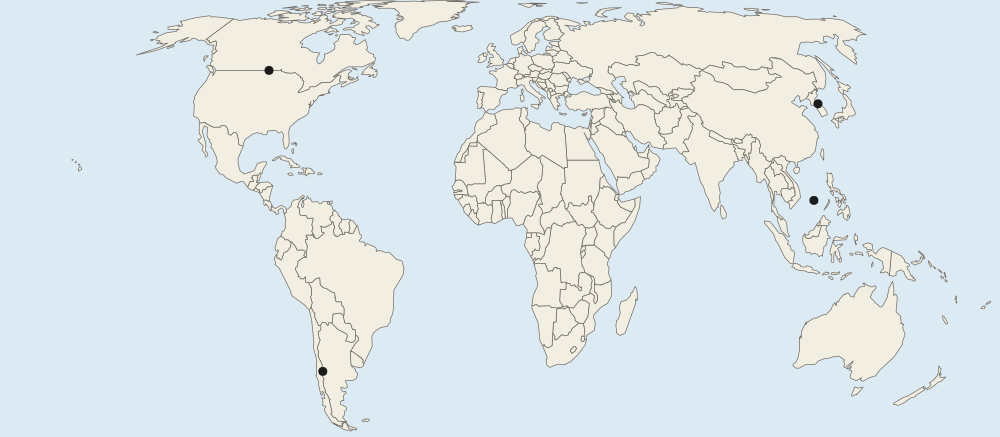
(A) Identify Identify the type of boundary at A. [1 point]
Identify means: Give the information asked for: a word or short phrase can earn the point, with no reasons needed.
(B) Describe Describe how the boundary at B works. [1 point]
Describe means: Give the relevant characteristics: what it is like, where and how much. A name alone earns nothing.
(C) Explain Explain why the boundary at C is often classed as an antecedent boundary. [1 point]
Explain means: Say how or why, with every link of the chain: a cause, then because or so, then its effect, tied to the place or data asked about.
(D) Define Define an exclusive economic zone (EEZ). [1 point]
Define means: Give the specific meaning of the term, in your own words, not an example of it.
(E) Explain Explain one reason several states claim islands and reefs in the sea at D. [1 point]
Explain means: Say how or why, with every link of the chain: a cause, then because or so, then its effect, tied to the place or data asked about.
(F) Explain Explain how the boundary at B affects migration between the two states it separates. [1 point]
Explain means: Say how or why, with every link of the chain: a cause, then because or so, then its effect, tied to the place or data asked about.
(G) Explain the degree Explain the degree to which a world map like this one can show how a boundary affects daily life at the local scale. [1 point]
Explain the degree means: State the degree first (to a high, moderate or low degree), then explain why with evidence.