The question
Name: ______________________ Date: ____________ Alpha and beta glucose in polymers (4 points)
Model
Alpha and beta glucose in polymers
The figure shows the two ring forms of glucose, part of a starch chain and parts of two cellulose chains. Carbon 1 is the ring carbon to the right of the ring oxygen; carbon 4 is on the opposite side of the ring.
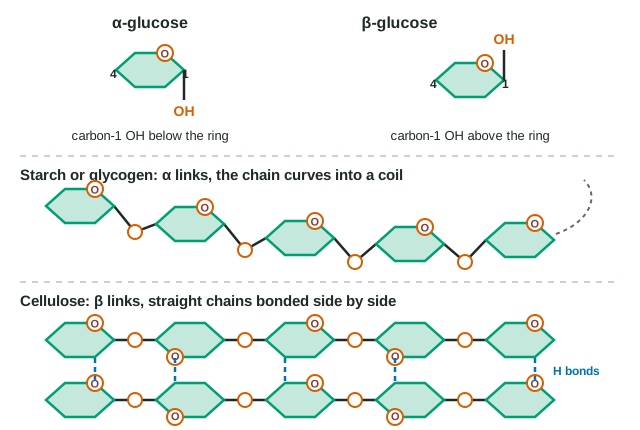
(a) Using the model, describe the difference between α-glucose and β-glucose. [1 point]
(b) Explain, using the model, how linking β-glucose units allows cellulose to form strong fibers. [1 point]
(c) Human saliva contains an enzyme that hydrolyzes starch but not cellulose, although both are made only of glucose. Explain this difference. [1 point]
(d) Glycogen, the animal storage polysaccharide, is like the starch chain in the model but has many more branches. Explain one advantage to an animal of storing glucose in a highly branched polymer. [1 point]